
Water Damage Mold Cleanup
Water damage mold cleanup clears growth left by flooding or a leak, then dries the building materials to prevent a return.
See water damage mold cleanupGet plumbing leak mold assessed in Artesia. The scope should cover repair, containment, HEPA cleaning, structural drying and final checks.
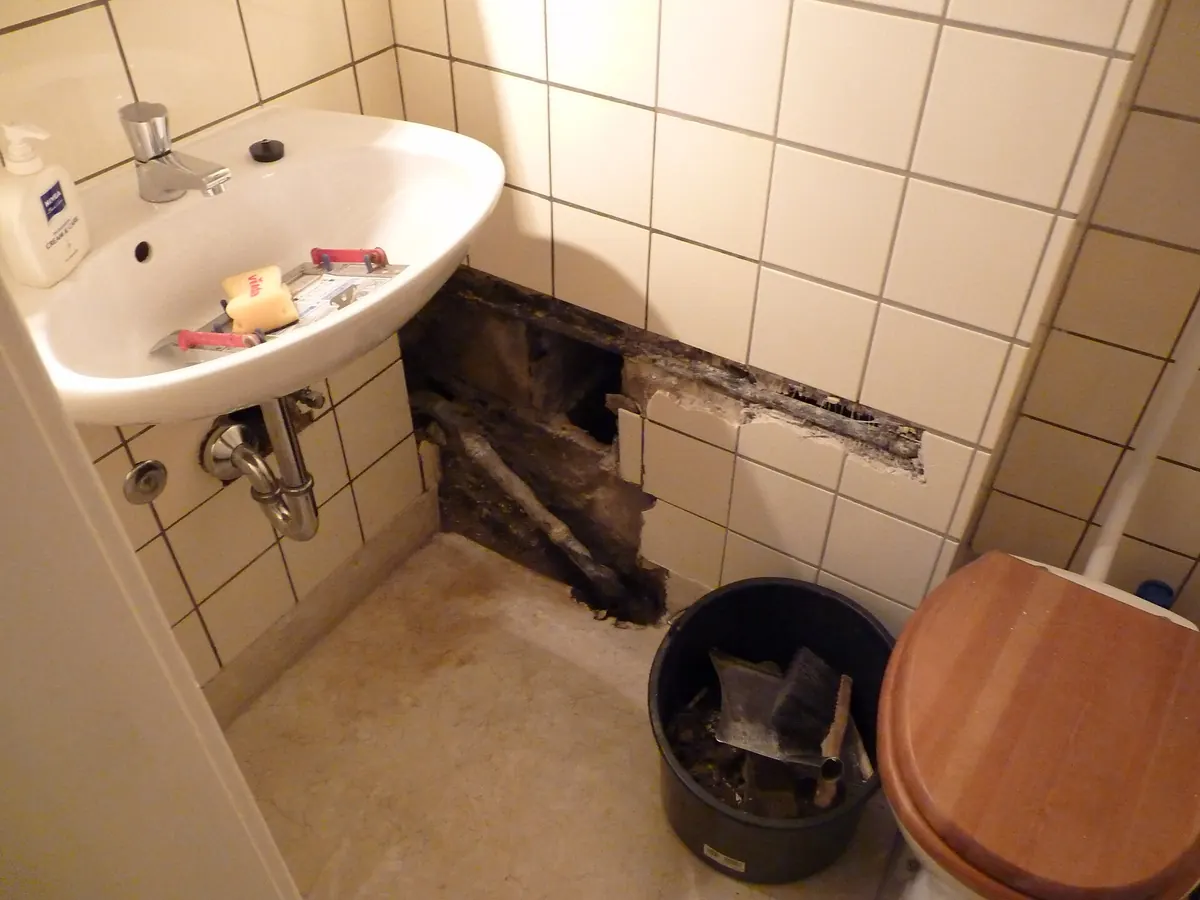
Cleanup includes leak repair, controlled removal, surface cleaning and drying.
Behind the wall, a water heater leak, burst pipe, supply line or drain line can soak water-damaged materials.
Water intrusion stops once the pipe is repaired. Containment barriers, dehumidification, removal of drywall and post-remediation verification belong in the written scope.

Testing should come from an independent assessor, separate from the company responsible for removal.
Check plumbing responsibility and how removal limits, drying targets and HEPA cleaning are defined.
Ask how the source is repaired and checked with moisture readings.
Find out where barriers will stand and which route debris will take out.
Hidden growth may be signaled by odor.
Water from pipes, drains or fixtures can dampen a ceiling. Confirm the source before opening it.
Look for wet insulation and drywall backing after a pinhole leak. Check stains or odor.
Dark growth under the sink may appear after a drain leak. Risk cannot be judged by color.
Wet padding or subflooring may remain concealed beneath a dry surface.
Control the water source prior to touching damaged materials.
Call (844) 352-3560Fixr puts combined water and mold damage between $2,700 and $10,000 while $150 to $350 covers a small leak repair, excluding mold removal. Affected materials and plumbing repair shape cost.
No site visit was used for these ranges, which are drawn from published national cost guides. Before work begins, you should get an explanation of the property price determined through an on-site assessment.
Ask about cost: (844) 352-3560Whether a loss is covered rests on policy terms. Seepage may be treated differently than sudden and accidental damage, with possible limits on mold coverage.
Your adjuster may need the repair record, photos, invoices and moisture readings.
California's Toxic Mold Protection Act includes a landlord written-disclosure section (Health and Safety Code 26147). By its own wording it applies only after the state adopts mold exposure standards, and the state health department has said it could not set them. Store the plumbing invoice, remediation scope, readings, pictures and clearance report.
Under California's housing law, visible mold found by a health officer or code enforcement officer can make a rental substandard. Renters can contact their local health or code enforcement department to ask for an inspection. Report the leak and save photos. Who pays varies according to the cause, lease and policy.
Find out if your insurance claim separates rebuilding, removal and drying into different items.
Begin with source control and finish with verification.
A moisture meter locates wet materials. Mold cannot be identified with a thermal imaging camera.
To control dust, pair an air filtration device with poly sheeting and negative air pressure.
Take out unsalvageable carpet and insulation along with wet drywall, ceiling tile and other materials.
For non-porous surfaces and sound framing, combine damp wiping with a HEPA vacuum.
Moisture readings guide the drying process with air movers and dehumidifiers.
Inspect dry materials, cleanliness and the leak repair. Choose a separate assessor to complete clearance testing.

Call whenever you need. A mold after a plumbing leak or burst pipe specialist answers, talks through what you are seeing and explains the next steps.
Bring in help if growth covers a large area, involves HVAC or follows contaminated water.
A moisture meter can find wet insulation and other affected materials.
Category 1 water includes supply water. While used water can be category 2 water, sewage is classified as category 3 water.
A HEPA air scrubber works with poly sheeting and negative air pressure to contain dust.
Can you clean it yourself? EPA says an area under about 10 square feet can often be cleaned after fixing the water problem.
Some washable surface materials can be cleaned. Damaged porous materials need removal.

California has no state license or certification for mold assessors or remediators, according to the California Department of Public Health. General construction work above a small dollar amount does need a license from the Contractors State License Board (CSLB), so it is worth checking a contractor's license there and asking about their mold training. Ask which permits apply to plumbing, demolition, electrical access or reconstruction.
EPA guidelines use 24 to 48 hours for drying water-damaged areas to prevent mold growth.
There is no federal indoor mold limit. Focus on moisture, materials and testing purpose.
The California Department of Public Health (CDPH) Air Quality Section publishes mold and dampness guidance and a mold FAQ. CDPH says visible mold, dampness, and mold odor are unhealthy and should be fixed, and that routine mold testing is not needed when mold is visible. Ask about requirements for the property type, mold work, plumbing repair and rebuilding.
Access, the drying process and final checks determine timing. Moisture that remains hidden can add time.
The full mold after a plumbing leak or burst pipe guide covers what is cleaned or removed, odor and air quality work, and the rules that apply in Los Angeles County and California.
Read the full mold after a plumbing leak or burst pipe guideLocal housing, humidity and property access can shape moisture control, containment and mold cleanup planning.
Since renters make up 50 percent of occupied homes in Artesia, you should record where water entered and notify the owner in writing before cleanup covers the evidence.
The local median build year is 1966, so a small visible patch may warrant checking the adjoining ceiling, flooring, or wall for moisture from an older component.
A single-family share of 71 percent means many properties have separate attics or foundations where damp wood and insulation can remain hidden from living areas.
Because 18 percent of seniors live alone, mold work should be explained in clear stages, including leak repair, removal, drying, and follow-up humidity control.
You can ask about mold cleanup in nearby communities and ZIP codes during the call.
Water damage mold cleanup clears growth left by flooding or a leak, then dries the building materials to prevent a return.
See water damage mold cleanup
Hidden mold remediation locates and clears hidden mold behind wall surfaces, beneath flooring and over ceilings where it is out of view.
See hidden mold remediation (behind walls)
Wall and drywall mold removal cuts out and replaces mold-damaged drywall and cleans the framing inside the wall.
See wall and drywall mold removal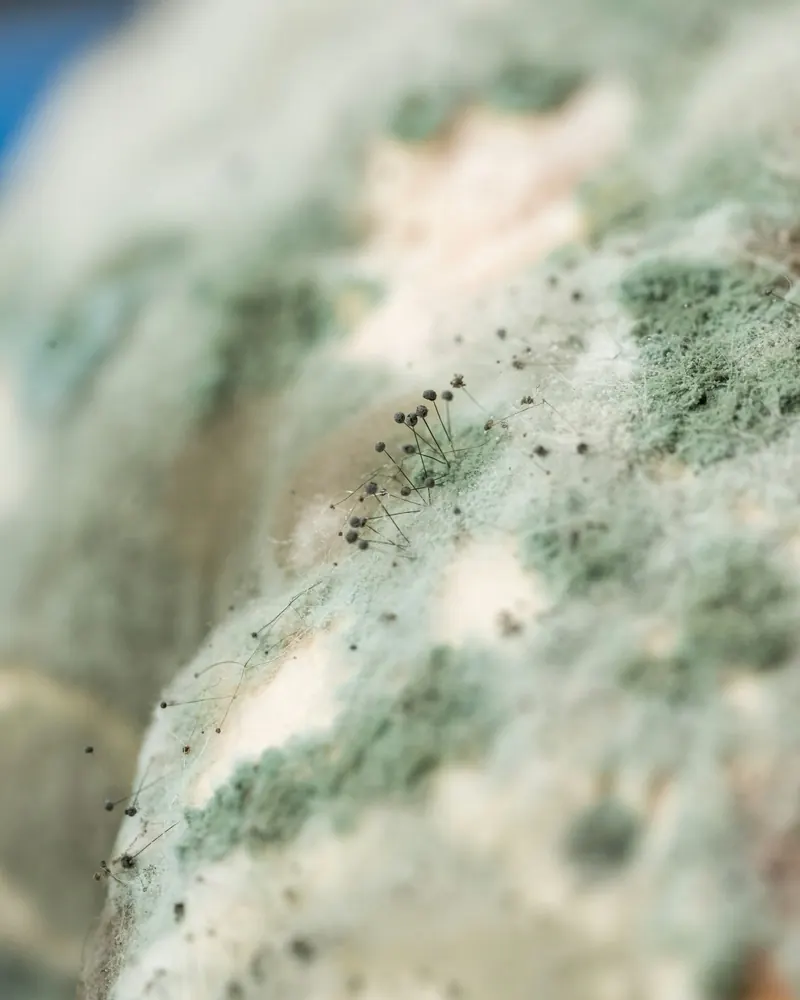
During subfloor mold removal, affected flooring and carpet are either cleaned or replaced after the underlying moisture source is addressed.
See floor and subfloor mold removal
During kitchen mold removal, workers clean wall surfaces and areas under sinks or behind cabinets, then track down the damp spot or leak.
See kitchen mold removal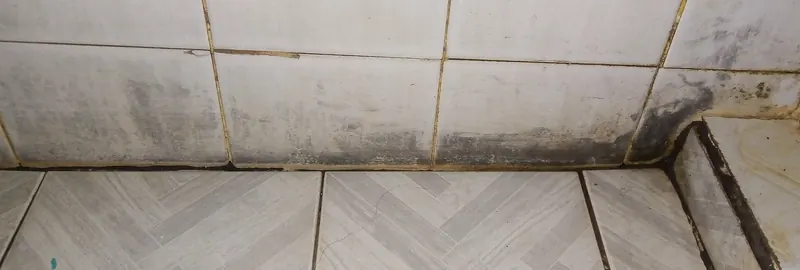
Bathroom mold removal cleans mold from ceilings, walls, grout and behind showers, and looks for leaks or poor ventilation.
See bathroom mold removal
Workers first use a mold inspection to find the affected areas and then remove and clean the growth.
See mold inspection and removal
With mold damage restoration, mold is removed first, then affected drywall, floors, insulation and other materials are fixed or replaced.
See mold damage restorationA pinhole, supply line or drain line leak may leave moisture inside the wall cavity. Watch for peeling paint, odor, soft surfaces or stains that return. The cavity can be examined through moisture mapping and carefully targeted access. Thermal imaging alone does not confirm mold.
An area under about 10 square feet is often suitable for homeowner cleanup after water repair, according to EPA. Seek experienced help when growth is large or hidden, sewage or HVAC systems are involved, or porous materials and walls require removal.
It may appear as spots, fuzzy patches or discoloration on drywall, wood or cabinet backing. An ongoing damp area or musty smell can be the earliest clue when growth stays concealed. Appearance cannot identify the type, and color does not measure risk.
No product alone addresses every part of the issue. Repair the leak, remove porous material that cannot be saved, clean surfaces and dry the structure. Although antimicrobial treatment can aid cleanup, removal, HEPA cleaning and moisture verification are still necessary.
Stop the leak, remove standing water and dry water-damaged items promptly. EPA recommends working within 24 to 48 hours for growth prevention. Examine nearby cabinets, drywall, floor materials and hidden cavities. Indoor humidity should remain below 60 percent and preferably between 30 and 50 percent.
Begin by examining material condition, odor, stains and the path taken by water. Take moisture readings across adjacent ceilings, floors, cabinetry and walls. A limited opening may be needed for a hidden cavity. Air sampling is not a substitute for finding wet materials.
Get calm, practical guidance about mold after a plumbing leak or burst pipe, with calls answered 24 hours a day.