
Wall and Drywall Mold Removal
Wall and drywall mold removal cuts out and replaces mold-damaged drywall and cleans the framing inside the wall.
See wall and drywall mold removalFor mold in walls in Artesia, ask for moisture mapping, controlled access, containment, removal, drying and water-source repair.
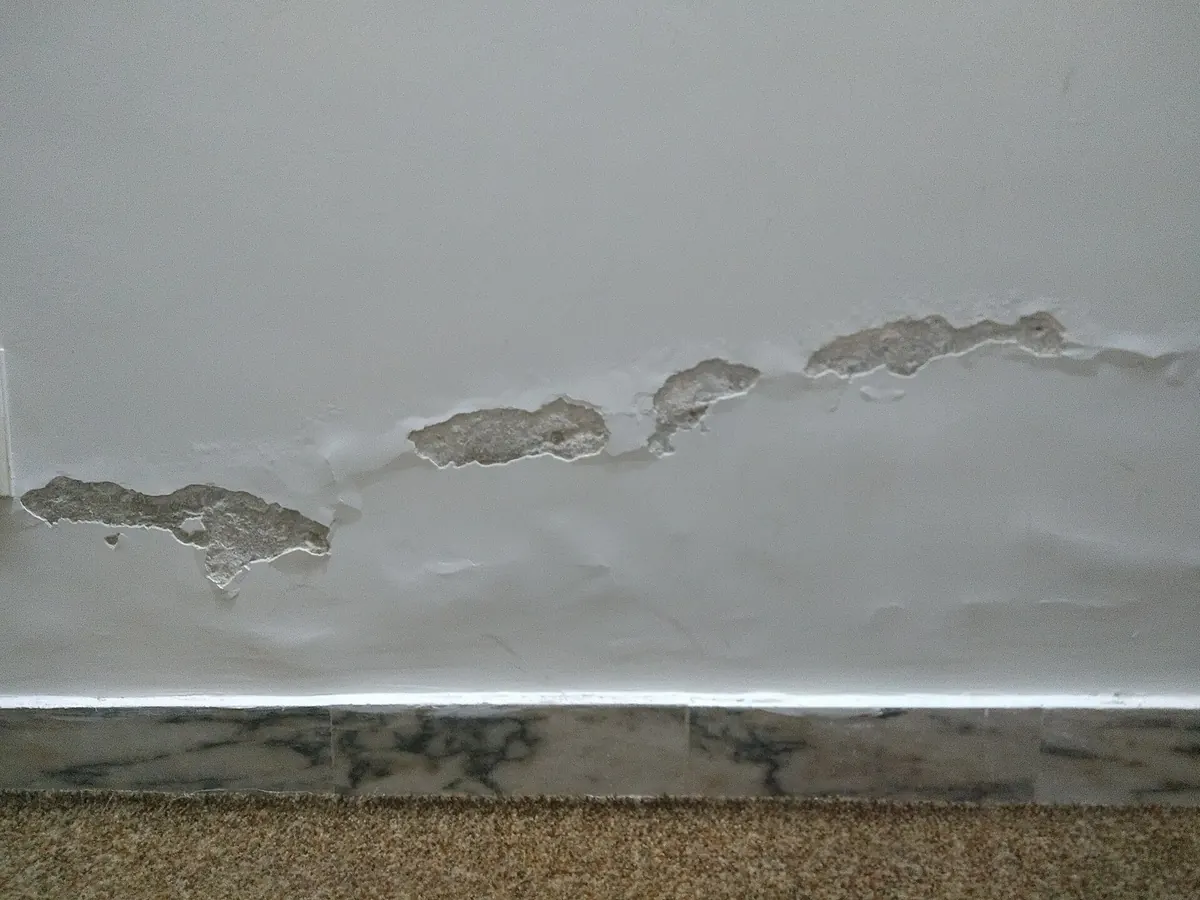
It is a controlled process for inspecting, removing, cleaning and drying cavity growth.
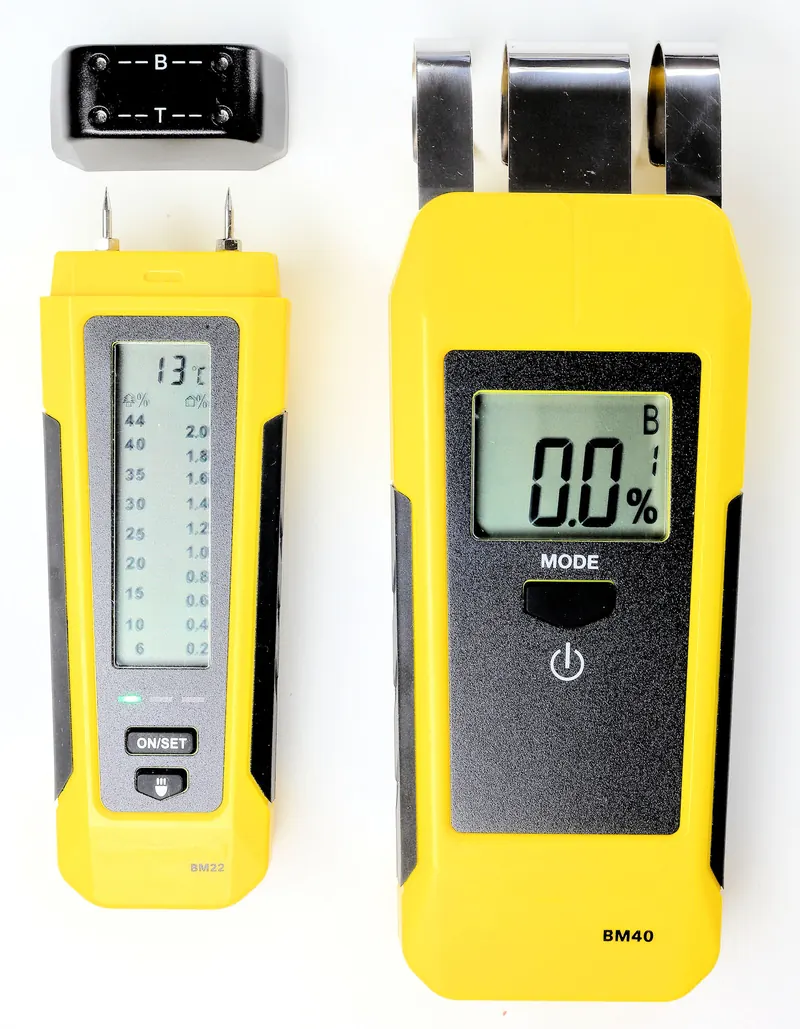
Drywall, framing and insulation may become wet from leaks. Water history and moisture meter readings support inspection. Thermal imaging can direct checks, but it does not identify mold.
To confirm mold behind drywall, an inspector may use a cut-out inspection, a borescope or inspection holes. Air sampling cannot show the growth location. Access, containment and moisture repair should appear in the scope.

Any clearance testing should use an assessor who is separate from the removal company.
Rebuilding responsibility and moisture repair should be listed in the scope along with containment removal, access and drying.
Ask how material exits containment and where poly sheeting will go.
Find out what justifies each planned opening. Use targeted access to protect undamaged material.
Focus the inspection when damp conditions, stains or odors return. Avoid widespread demolition.
Flooring and baseboards can conceal collected water. A small access point can expose damp subfloor.
Treat black mold as a search term rather than proof of danger. CDC states that risk cannot be shown by color.
A slow sink leak may go unnoticed. Look for clues such as odor or swollen panels.
Before surfaces change, pipes can leave wet drywall and insulation. Use moisture mapping to define the area.
If it is safe, stop additional water and record the area before any surface is opened.
Call (844) 352-3560Bob Vila reports a $500 to $8,000 range for mold concealed behind a tub or bathroom vanity. Fixr reports $1,000 to $12,000 as the wall mold removal range. National guide figures do not quote your project. Access needs and moisture repair influence cost.
The figures are published national cost guide ranges, not results of a property visit. An on-site assessment determines the price for your property, and you should receive an explanation before the work begins.
Ask about cost: (844) 352-3560Insurance coverage may apply after a covered sudden water event. Common exclusions include neglected maintenance, humidity and long-term leaks. The policy may apply a mold sublimit.
Under California's housing law, visible mold found by a health officer or code enforcement officer can make a rental substandard. Renters can contact their local health or code enforcement department to ask for an inspection. Save repair records, notices and leak reports. The source and local rules determine responsibility.
California's Toxic Mold Protection Act includes a landlord written-disclosure section (Health and Safety Code 26147). By its own wording it applies only after the state adopts mold exposure standards, and the state health department has said it could not set them. Retain the clearance report, scope, moisture readings, photos and invoices.
Compared with condensation, deferred maintenance or slow leaks, a burst pipe may receive different treatment.
Report water promptly. Ask about the deductible, mold sublimit and approval before opening materials.
A remediation protocol covers access, containment, removal, cleaning, drying and verification.
Leak history, odor and moisture readings guide inspection.
A containment barrier is made with poly sheeting. Use an air filtration device to pull air inward.
Measured openings limit demolition of damaged materials.
Run a HEPA air scrubber. Porous materials leave in closed bags.
A cleanup crew may choose damp wiping, wire brushing, a HEPA vacuum or HEPA sanding. Cleaning cannot be replaced by antimicrobial treatment.
A dehumidifier and air movers support drying. Use readings for repairs.
Use final cleaning to remove dust. Use an independent assessor to complete clearance testing.

Call any hour. A hidden mold remediation (behind walls) specialist answers, talks through what you are seeing and explains the next steps.
Do-it-yourself work is not suited to large growth, HVAC involvement or water contamination.
For some people, exposure to mold can trigger symptoms of allergy and asthma. People with sensitivities should not enter.
After sewage or contaminated water, EPA calls for experienced help.
Behind a small stain, a larger wet area may be hidden. Damage is found through controlled access.
Can you clean it yourself? For an accessible moldy area measuring under about 10 square feet, EPA says homeowner cleaning often works. Concealed growth requires different consideration. Experienced help fits contaminated water, HVAC involvement and larger affected areas.
Timing depends on reaching the area, completing leak repairs and drying it. Any early schedule is tentative.
A musty smell can point to damp material, but not its location or size. Moisture needs to be traced during inspection before access.
According to EPA, maintain indoor relative humidity under 60 percent and ideally 30 to 50 percent. Use a dehumidifier for support, but repair any active leak.
California has no state license or certification for mold assessors or remediators, according to the California Department of Public Health. General construction work above a small dollar amount does need a license from the Contractors State License Board (CSLB), so it is worth checking a contractor's license there and asking about their mold training. Check local permit needs for plumbing repair, electrical work, structural demolition or rebuilding.
Correct the water problem. EPA says to dry water-damaged areas and items within 24 to 48 hours to prevent mold growth.
An indoor mold limit has not been set federally. Use testing to support the physical inspection.
The California Department of Public Health (CDPH) Air Quality Section publishes mold and dampness guidance and a mold FAQ. CDPH says visible mold, dampness, and mold odor are unhealthy and should be fixed, and that routine mold testing is not needed when mold is visible. Confirm the rules that govern the property and planned work.
The full hidden mold remediation (behind walls) guide covers what is cleaned or removed, odor and air quality work, and the rules that apply in your state.
Read the full hidden mold remediation (behind walls) guide
Planning for moisture control, containment and mold cleanup can be influenced by local humidity, housing and property access.
Since renters make up 50 percent of occupied homes in Artesia, you should record where water entered and notify the owner in writing before cleanup covers the evidence.
The local median build year is 1966, so a small visible patch may warrant checking the adjoining ceiling, flooring, or wall for moisture from an older component.
A single-family share of 71 percent means many properties have separate attics or foundations where damp wood and insulation can remain hidden from living areas.
Because 18 percent of seniors live alone, mold work should be explained in clear stages, including leak repair, removal, drying, and follow-up humidity control.
During your call, ask whether mold cleanup is available in surrounding communities and ZIP codes.
Wall and drywall mold removal cuts out and replaces mold-damaged drywall and cleans the framing inside the wall.
See wall and drywall mold removal
Workers first use a mold inspection to find the affected areas and then remove and clean the growth.
See mold inspection and removal
Mold testing collects surface or air samples for laboratory analysis of the mold types present and their amounts.
See mold testing
A visual check and air samples are part of mold clearance testing performed after removal to confirm a clean space.
See mold clearance testing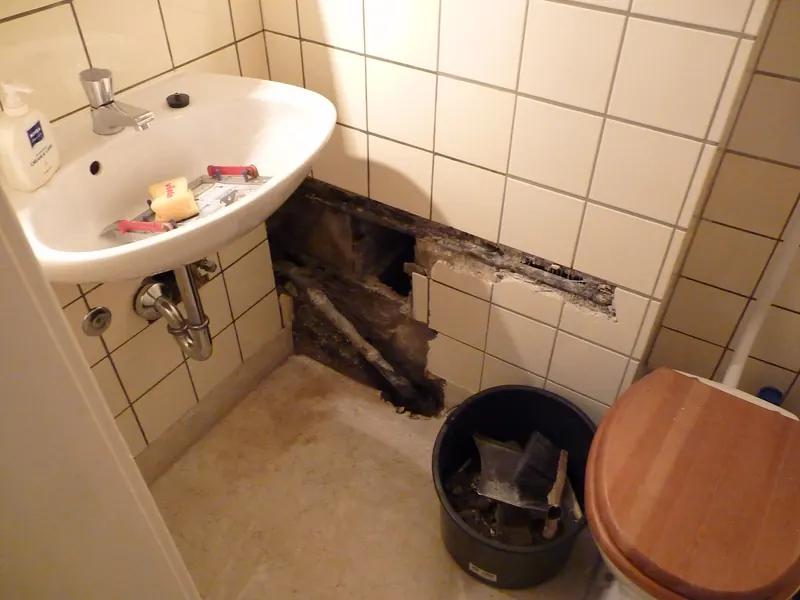
Plumbing leak mold is removed from wall, floor and cabinet materials left wet by a burst pipe or by a slow drip.
See mold after a plumbing leak or burst pipe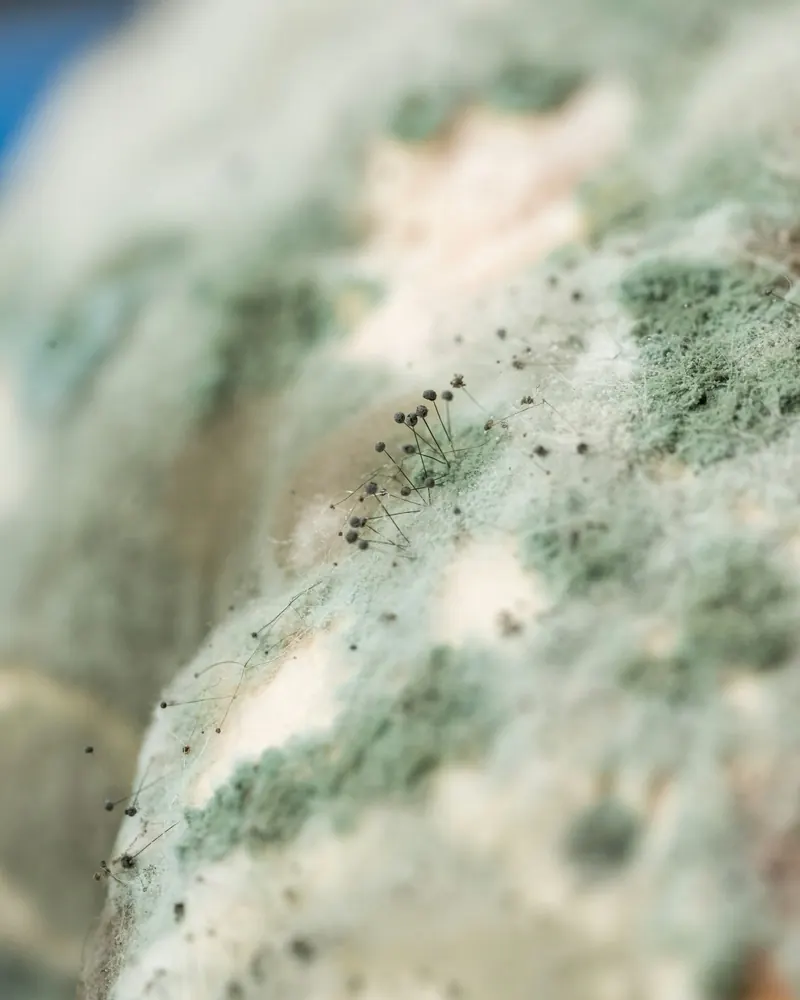
During subfloor mold removal, affected flooring and carpet are either cleaned or replaced after the underlying moisture source is addressed.
See floor and subfloor mold removal
Wet or moldy insulation is taken out of attics, crawl spaces and walls during mold removal, then replaced once cleaning is complete.
See insulation mold removal
With mold damage restoration, mold is removed first, then affected drywall, floors, insulation and other materials are fixed or replaced.
See mold damage restorationYour water source and policy affect the available coverage. Mold may qualify after an event that is covered, sudden and accidental. Long-term leaks, ongoing humidity and neglected maintenance are commonly excluded. Ask what records are required, whether materials may be removed, and how the deductible and mold sublimit apply.
Consider who occupies the home, whether HVAC is involved, and where and how large containment is. Find out how airflow is controlled and which rooms have restrictions. People who have lung disease, weak immune systems or asthma are at greater risk around mold.
Removal may not be necessary for surface growth, but growth through drywall's paper facing is hard to clean. The decision depends on moisture and condition. Use limited inspection to prevent needless removal and damaged porous material remaining within the cavity during repairs.
A dependable duration cannot be given until access and moisture conditions are known. One cavity is not the same as growth behind cabinets, multiple walls or floors. Timing reflects leak repair and drying, plus containment removal, post-remediation verification, surface cleaning and later rebuilding work.
The guide range for wall mold removal is $1,000 to $12,000 total, compared with $500 to $8,000 for mold concealed in a bathroom vanity or tub area, up to. Access, containment and moisture repair affect cost. Do not treat these Fixr and Bob Vila ranges as a quote for your property.
Signs around plumbing, roof lines or windows include soft drywall, stains, odor, peeling wallpaper and swollen baseboards. Follow moisture before opening materials. A controlled inspection hole may be needed. Dust and mold spores can enter nearby rooms through uncontained openings.
For calm and useful guidance about hidden mold remediation (behind walls), you can reach someone by phone 24 hours a day.